
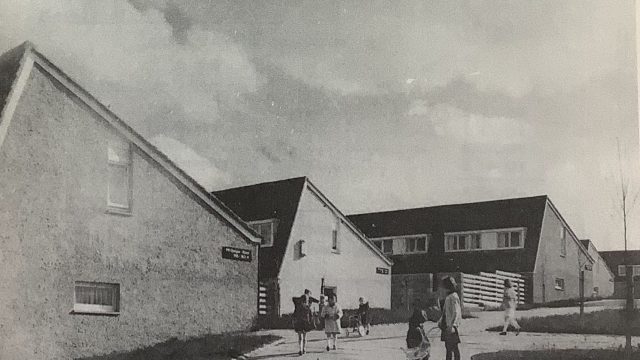
In the late 1960s Wates Ltd, a construction company interested in planning and developing ‘large-scale private-enterprise new communities’, sponsored a study by Ferdinand Zweig as they were interested in his opinion on Cumbernauld New Town in terms of traffic segregation. Zweig, at this point, had ‘an outstanding reputation as chronicler and analyst of the social scene’ (p.6). His academic research to this point had focused on workers, both male and significantly female, as well as students. He was interested in questions of class and affluence in the immediate post war decades. Zweig was therefore well placed to produce a report which was based on the thoughts and opinions of Cumbernauld’s residents themselves. His study, published by the Urban Research Bureau in 1970, tells us a great deal about the contemporary experience of those who had relocated to Cumbernauld in the 1960s and fortunately was not confined to his opinions on traffic.
So what did Zweig find? In this blog I’m going to outline some of the highlights that I think are more useful for us, returning to interview residents and former residents, just over 52 years later.
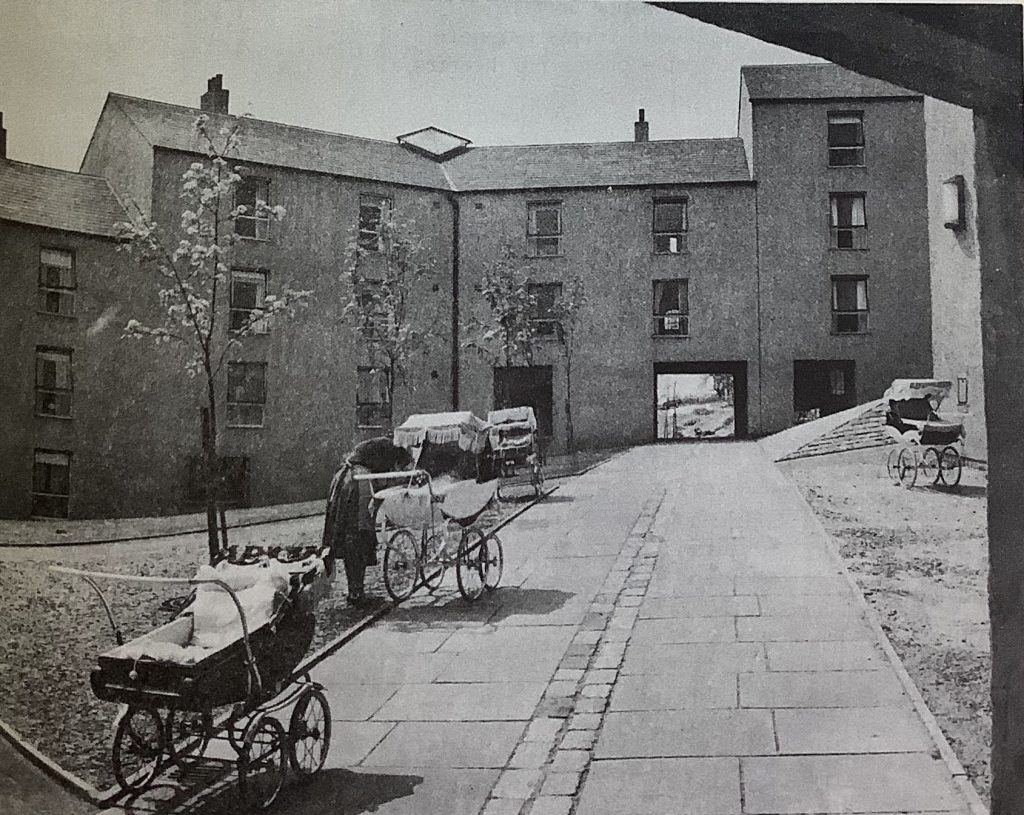
Zweig began his field work in July 1969, and was comprehensive in his approach, completing 112 interviews with residents as well as ‘architects, planners, statisticians, finance men, housing manager, welfare officers, health doctor, town clerk, ministers of various churches, probation officers, shopkeepers, maintenance men, bank managers, factory personnel managers, teachers, librarians etc’ (p. 8). His interviews were unscheduled and conducted as informal conversations and he was ‘often invited home and shown around’ (p. 8). He also read published and unpublished material and perused back numbers of the Cumbernauld News. (In this respect we’ll be very much following in his footsteps!) In addition Zweig visited all the other new towns conducting a total of 31 additional interviews.
This was a ‘fact finding study, not as a mere record of views and opinions’ (p. 8). An earlier Household Survey of Cumbernauld in 1967 conducted by the University of Strathclyde’s Department of Sociology had found that while 87.1% of their sample were ‘favourable to Cumbernauld’ the ‘number of adverse comments appears quite disproportionately large’ (p. 9). Zweig found similar in his study and this provided the ‘main theme’ of his investigation. Why would people say they were satisfied when they had so many complaints? (Notably Pearl Jephcott had found the same in those who had relocated to high rise flats in Glasgow and found this sentiment equally puzzling).
When Zweig was interviewing people in Cumbernauld, the town was yet to be completed and this undoubtedly influenced residents’ opinions on their satisfaction with living there – they were enduring the temporary nature of the town in the present, but in time all the amenities and facilities they required would be provided – they hoped. Most importantly, perhaps, this would have been better than the alternative. If they had stayed in Glasgow they would have waited years for a new house of comparable quality. Most respondents stated that their reasons for moving to Cumbernauld were for ‘clean fresh air’, that it was ‘ideal for the children’ and finally for a ‘comfortable house’ – it didn’t matter if it was ‘drab on the outside’ as it was ‘nice inside’ (p. 23). Zweig drew the conclusion that many Cumbernauld residents had actively wanted to move away from ‘city life’ but remain easily commutable to Glasgow.
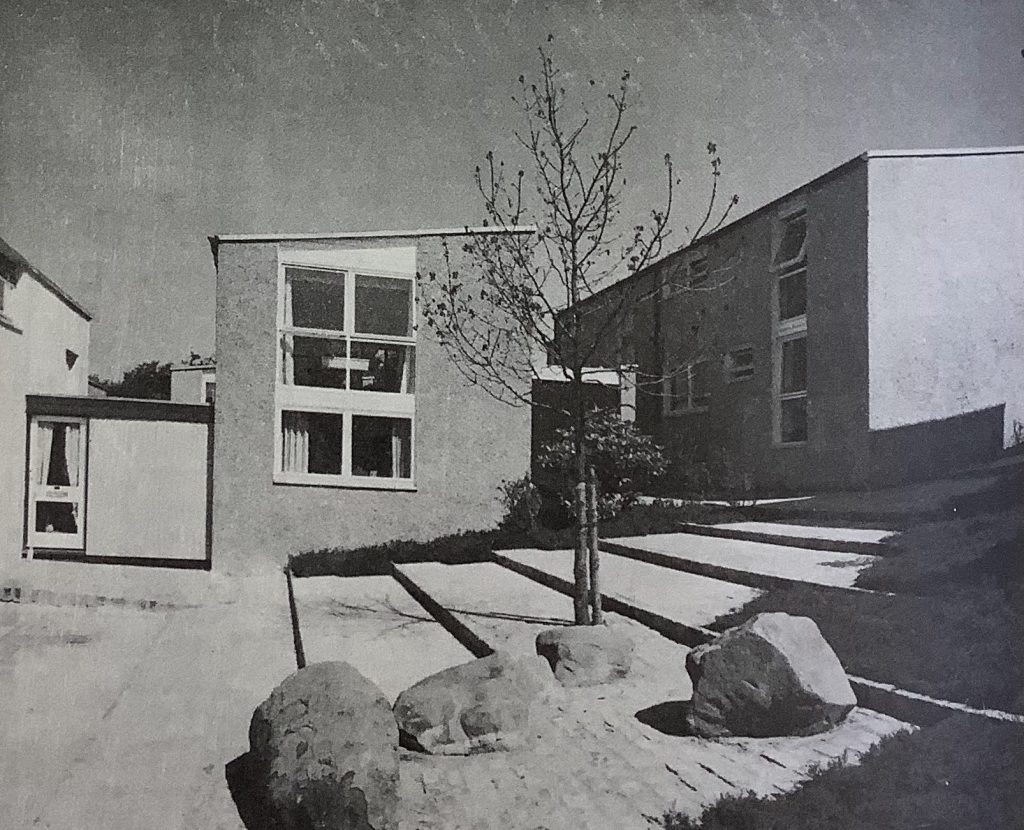
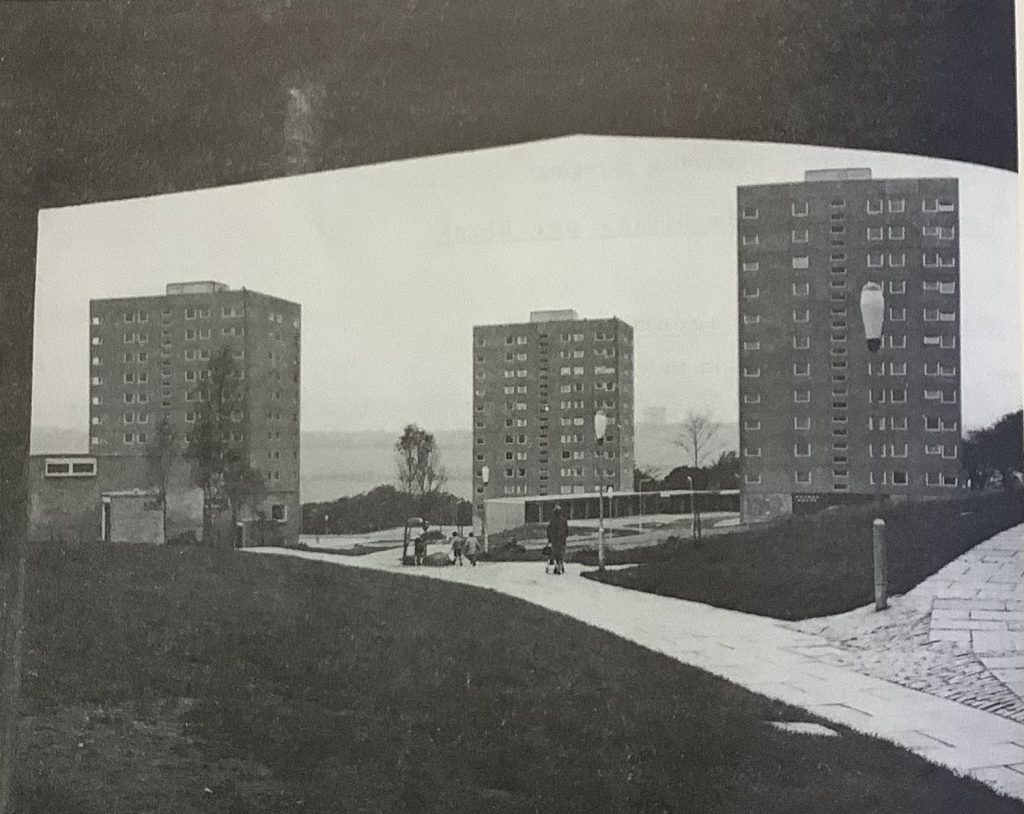
Cumbernauld’s planning and design was a conscious departure from earlier Mark I new towns – especially in terms of traffic management with a strict separation of pedestrians and vehicles – see our summary of the town for more. This was seen by residents as ideal for children who could ‘run and play, safe from the traffic’ (p. 24) (see image below of Ravenswood for example). Zweig even suggests that happiness in the new town was proportionate to the number of children in the family. There were plenty of playgrounds, not always well equipped according to Zweig, but appreciated by children and their parents. According to teachers ‘the neglect of children encountered in Glasgow is practically unknown in Cumbernauld’ (p. 25). But on the other hand parents worried about being good parents and such anxiety led to the doctors in the Health Centre being ‘chronically overworked’ (p. 25). Zweig also worried about the signs of hooliganism and vandalism among children and young people.
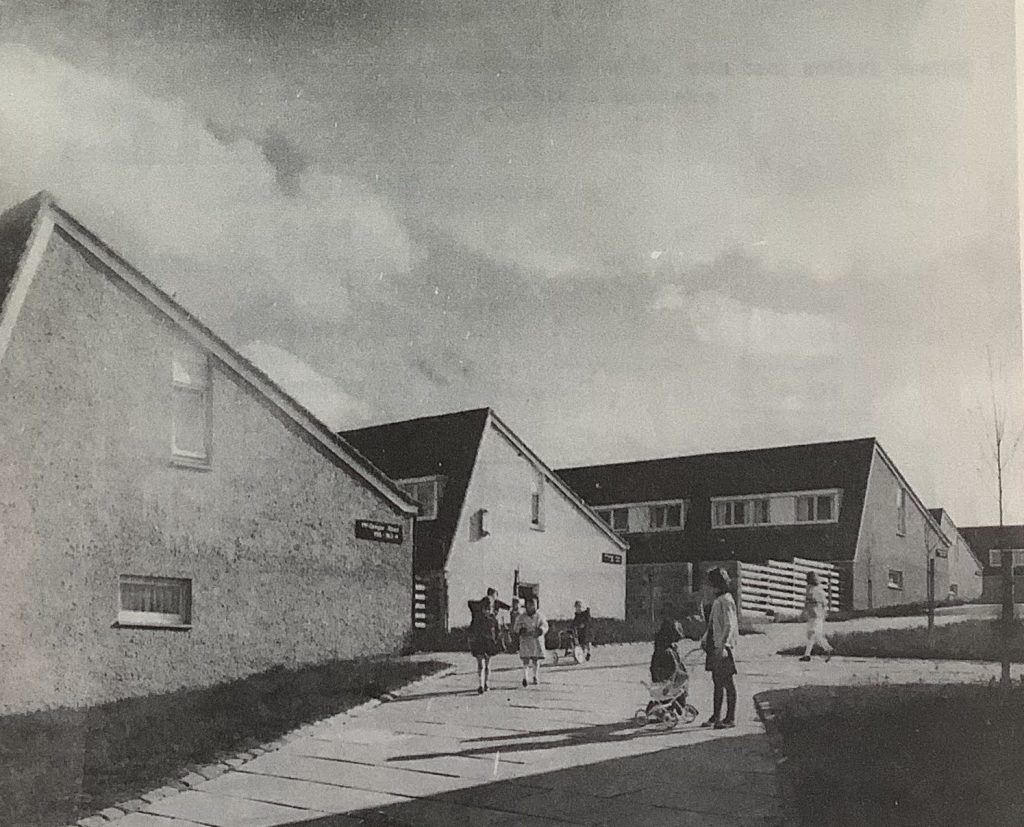
Meanwhile most of the people Zweig spoke to, who were not always entirely satisfied with the town layout, were very happy with their houses. As Zweig suggests ‘the houses in Cumbernauld can be well appreciated on their own merits without the alternative of a Glasgow tenement’ (p. 26). In 1969 there were 57 different types of house combined with various sizes to cater for single people to older couples and large families. There were maisonettes, low-rise and high-rise flats, bungalows, houses on two or three levels and penthouses in the town centre. Zweig noted that houses were the most popular. The houses were built to five standards of finish with various types of heating. He therefore found that some of the people he had spoken to had moved within the town to what they thought of as ‘nicer areas’ as new houses were completed with central heating and double glazing. Indeed, Zweig suggested that the move to Cumbernauld was ‘regarded by many as a step up socially, on the first rung of the ladder to self-improvement’ (p. 46).
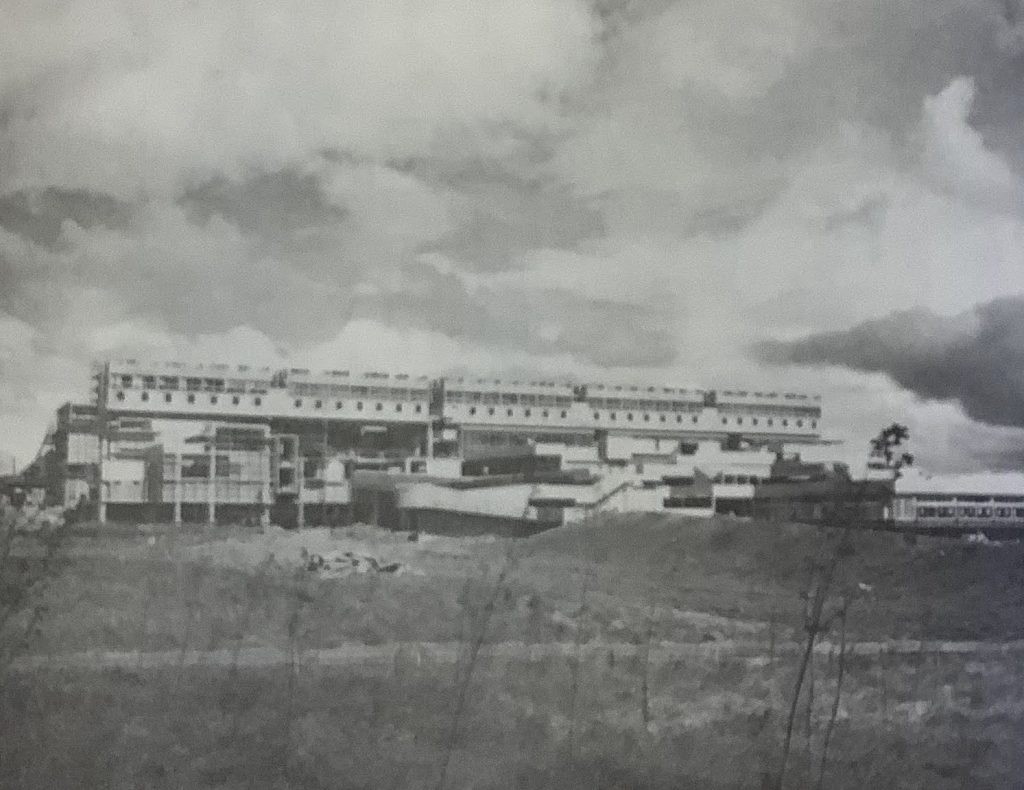
As a final point, opinions of Geoffrey Copcutt’s Megastructure and the town centre in general were unsurprisingly very divided. Here’s a few examples (p. 37):
- ‘An ugly part of town, dirty and drab, a greying battleship or air-craft carrier’
- ‘The only read place of interest in the town, the rest is a desert’.
- ‘It’s very convenient for shopping and everything is handy and you can leave the kids for an hour or two in the creche’.
Zweig wisely drew no conclusions given the opinionated nature of responses! The original structure and subsequent modifications have continued to provide such polarised views among residents and non-residents alike.
I’m looking forward to finding out how the pioneering generation, those making the decision to relocate to Cumbernauld in the 1960s and 1970s, reflect on those early decades and their motivations for moving. I’m also keen to find out from the subsequent generations what it was like to grow up in the different areas of Cumbernauld and how this has shaped their lives.
Valerie Wright
References
Ferdinand Zweig, The Cumbernauld Study, Commissioned by the Urban Research Bureau, Sponsored by Wates Limited (London, 1970).
For more on Zweig’s research on women’s work see:
Helen McCarthy, Social Science and Married Women’s Employment in Post-War Britain, Past & Present, Volume 233, Issue 1, November 2016, Pages 269–305, (esp. pp. 280-1), https://doi.org/10.1093/pastj/gtw035
For more on the high satisfaction rates in Glasgow high rise see:
Lynn Abrams, Ade Kearns, Barry Hazley and Valerie Wright, Glasgow: High-Rise Homes, Estates and Communities in the Post-War Period (London: Routledge, 2020), p. 28.
To find out more about Cumbernauld and for a taste of life in the town see:
Cumbernauld resources:
Diane Watters, ‘New Town, My Town’, Edinburgh International Book Festival: On the road, 19 April 2017 – https://ontheroad.edbookfest.co.uk/blog/diane-watters-new-town-my-town/
Miles Glendinning & Diane Watters, ‘Cumbernauld’ in R. Close, J. Gifford, & F. Walker (eds.). The Buildings of Scotland: Lanarkshire and Renfrewshire (London and New Haven: Yale University Press, 2016) pp. 232-62.
Films:
…
National Library of Scotland, Moving Image Archive:
Cumbernauld: Town For Tomorrow, 1970 – https://movingimage.nls.uk/film/2227
Cumbernauld Hit, 1977 – https://movingimage.nls.uk/film/4294
Images:
Gair Dunlop ‘Looking Back on Modern Living’ – https://bookleteer.com/book.html?id=2749&#page/2/mode/2up
Fiction:
Kirkland Ciccone Happiness is Wasted on me (Edinburgh: Fledgling Press, 2020) https://kirklandciccone.wordpress.com/books-2/
Our project is now complete but you are still welcome to get in touch with Dr Alistair Fair via https://www.eca.ed.ac.uk/profile/dr-alistair-fair If you have any questions about the project or media requests.
See our Privacy Statement relating to comments and the contact form here – https://newtownsscotland.eca.ed.ac.uk/privacy-cookies/